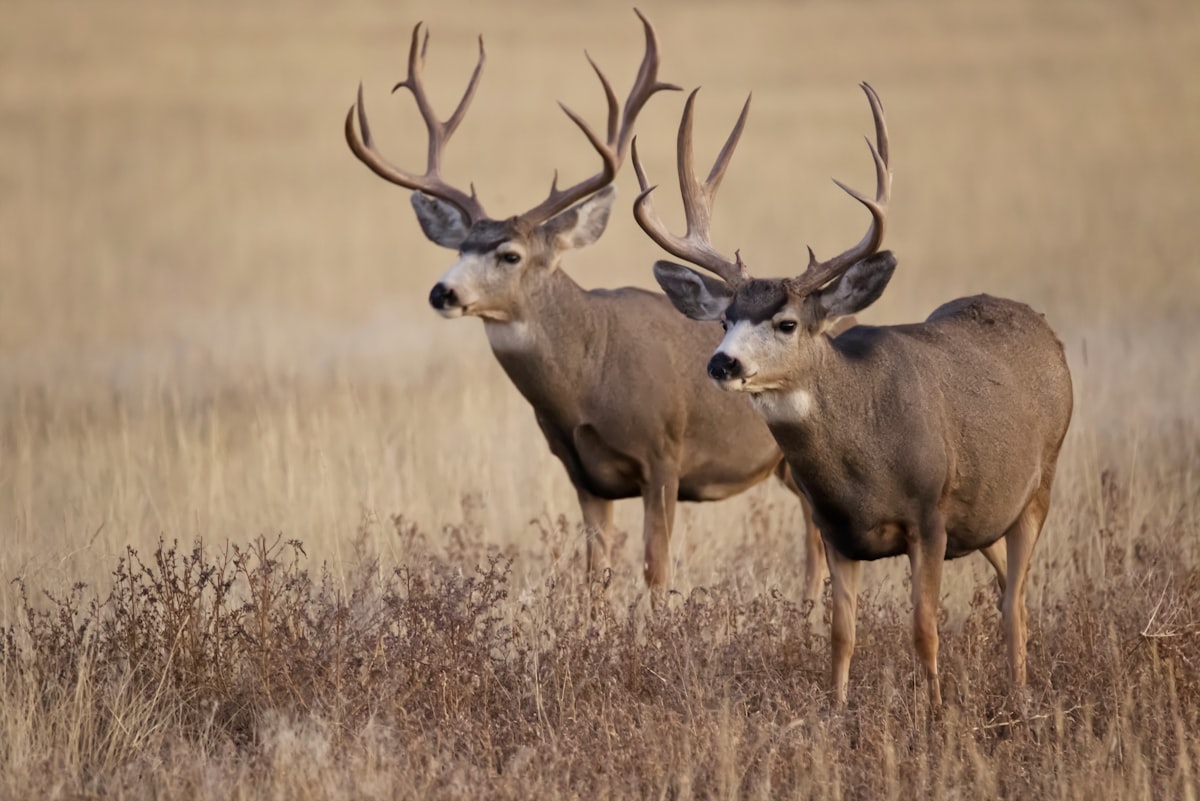
Hunt Area 27 sits in the rain shadow of the Bighorn Mountains in north-central Wyoming, anchored by the town of Buffalo (elevation 4,645 ft) and stretching from high-country meadows above 9,000 feet down to the sage-and-prairie benches along Clear Creek and Rock Creek. It is one of the most geographically varied mule deer units in Wyoming — a genuine four-season state compressed into a single October week. Understanding which version of Area 27 you're hunting matters more than the license itself.
A Place Shaped by Conflict and Conservation
The Crow and Eastern Shoshone hunted the Bighorn Mountains for thousands of years before European settlement — the high basins were summer elk and deer range, the foothills winter ground, and those patterns still hold today for wildlife that remained after the homesteading era rewrote the lower country.
Buffalo was established in 1879 as a supply hub along Bozeman Trail country, and within a decade the surrounding land was locked in one of the West's most infamous property disputes. The Johnson County War of 1892 pitted large cattle operations against small ranchers and homesteaders over range rights — a conflict that ended with federal troops being called in, and left a land ownership patchwork that hunters still navigate every October. Much of the lower-elevation ground that deer use for early season and winter range ended up in private hands. That hasn't changed.
The Bighorn National Forest was established in 1897, preserving roughly 1.1 million acres of high country. That federal designation is what makes this unit huntable for the public at all. Without the Forest, Area 27 would be a private-land trophy game for outfitters and landowners. With it, you have a legitimate public-land mule deer hunt — though you'll be working hard for every legal access point below the tree line.
The 20th century added grazing allotments, timber sales, and eventually a Walk-In Access program that partially bridged the gap between the Forest boundary and the valley floor. The Bud Love Wildlife Habitat Management Area, managed by WGFD, covers approximately 6,800 acres of enrolled private land open to public hunters — mostly the transitional brushy draws and creek bottoms where mule deer stage in October before moving to winter range.
What Makes Area 27 Worth the Trip
The honest case for hunting Area 27 starts with access structure. Wyoming's general deer license covers mule deer statewide — no draw, no waiting period, over-the-counter for residents and nonresidents alike. For hunters who've spent years burning preference points in Colorado or Arizona, the ability to plan a trip in August and hunt Wyoming in October is not a small thing.
Three U.S. Highways intersect or border the unit. US-16 (the Cloud Peak Skyway) climbs west from Buffalo through Tensleep Canyon, reaching the high country at Powder River Pass (9,666 ft). US-14 and US-14A provide northern access via Burgess Junction. All three are paved, maintained routes — not Forest roads requiring high clearance. In early October, before heavy snowfall, all are open and well-traveled.
The elevation diversity is genuinely useful. Hunters willing to put in boot time can glass sage flats at 5,000 feet in the morning, glass alpine parks at 8,500 feet in the afternoon, and cover both habitat types in a single day. Mature mule deer bucks in October are in transition — pushing out of summer range, responding to cooling temperatures and the approaching rut — and a hunter who understands that movement can intercept deer at multiple elevation bands on the same hunt.
General rifle season success rates in Area 27 have historically run 35–42% for buck mule deer, competitive with most public-land western units at this price point. Archery hunters should expect lower odds — typically 15–20% — given the open terrain and educated deer. The unit also holds whitetail deer in the riparian corridors along Piney Creek, Rock Creek, and their tributaries. Success rates in good years can exceed what hunters see chasing muleys across open country.
Hunted Area 27 before? Post your experience on the unit page — access conditions, deer numbers, what elevation you found deer at. That kind of ground-truth intel helps every hunter who comes after you. Go to the Area 27 unit page →
The Honest Liabilities
The 2022–23 winter was catastrophic for Bighorn mule deer. Extended snowpack, extreme cold, and ice crusting killed a significant portion of the regional herd. Area 27 was not exempt. Herd numbers entering 2025 were still tracking below management objectives. Buck-to-doe ratios have been improving since that low — which is encouraging — but hunters expecting to see the deer numbers of a decade ago will be disappointed. This is a rebuilding herd, not a booming one.
Area 27 is not a trophy factory. The general license structure means hunting pressure is real, particularly during the opener, and most bucks that survive to shootable size are 3.5-year-olds. True 5.5+ age-class bucks exist but they're the exception. Hunters coming from a limited-entry mentality — expecting to pass on 150-inch deer while waiting for 180 — will go home empty-handed most years.
Private land blocking lower-elevation access is the unit's most persistent frustration. The valley floors along Clear Creek and the Big Piney drainage are substantially private, and mature deer know it. Bucks that survive a few seasons learn to stage on private ag land adjacent to the Forest. The Bud Love WHMA parcels help, but they don't solve the problem — map your access carefully on onX or BaseMap before you arrive.
Chronic Wasting Disease is present in Johnson County and the broader Bighorn region. WGFD requires hunters to follow mandatory handling protocols: no transport of high-risk materials (brain, spinal column, lymph nodes) out of established CWD management zones. CWD testing stations in Buffalo operate during season — bring the head in, get results in 10–14 days.
Elk hunters compete for the same roads, campgrounds, and Forest access points in early October. Popular trailheads off US-16 fill quickly on opening weekend. Arrive mid-week before the opener if you're counting on a specific campsite.
Finally: the Bighorn high country is a glassing country — wide-open parks, long ridges, distant draws. Budget optics will cost you deer. A quality 10x42 binocular and a 65–85mm spotting scope are not optional equipment above 7,500 feet.
Have updated CWD testing station hours, road conditions, or Walk-In area intel? Add it to the unit page — that's exactly the kind of current information that GPS coordinates can't tell you. Post on the Area 27 unit page →
The Full Bag: What Else Is in There
Mule deer are the primary draw, but Area 27 offers more than most hunters realize.
Elk are present across the unit and can be pursued on a Wyoming general elk license where applicable — verify with current WGFD regulations, as general and limited licenses vary by area and season. Black bear seasons run in both spring and fall, with the fall season overlapping deer. Hunters carrying a bear tag alongside a deer license occasionally fill both. Mountain lion hunting operates under a quota system; licenses are available over-the-counter until quotas are reached.
Merriam's turkey populations are solid in the Bighorn foothills, particularly in the ponderosa pine and oak brush country below 7,000 feet. The fall season overlaps deer season and the birds are overlooked — the turkey hunting around Buffalo doesn't get written up in magazines, but it's genuinely good.
Blue grouse (dusky grouse) live in the higher-elevation spruce and fir stands and are almost universally ignored by deer hunters carrying rifles. A shotgun and a grouse license weigh little, and the birds can turn a slow deer day into a productive one.
Whitetail deer occupy the creek-bottom riparian zones — Piney Creek above Story, Rock Creek drainage, North Fork Powder River. Stand hunting near water is productive in these corridors. In good years, success rates are high because the habitat is limited and the deer have nowhere else to go.
How Hunters Support the Place
Every deer, elk, and upland license sold in Wyoming generates Pittman-Robertson excise tax revenue — a federal fund derived from taxes on firearms and ammunition that flows back to state agencies for wildlife management and land acquisition. WGFD uses that funding for habitat projects in the Bighorn foothills, including the Walk-In Access program that covers the Bud Love WHMA and other enrolled parcels. Without hunter participation, those acres go back behind fences.
The local economy in Johnson County runs on October. Buffalo's outfitters, motels, and restaurants see substantial seasonal revenue from hunters — Wyoming's statewide hunting economic impact runs into the hundreds of millions annually, and Johnson County takes a meaningful share.
The WGFD's harvest reporting system — check stations, mandatory online reporting, voluntary telephone surveys — relies on hunter-submitted data to estimate population trends in Area 27. Those estimates drive season structures, license quotas, and habitat investments. Hunting is not incidental to how this landscape is managed; it is the primary tool.
Bottom Line
Area 27 is a legitimate over-the-counter western mule deer hunt with real public land, real access, and real challenges. The Bighorn NF high country, Bud Love WHMA Walk-In access, and three highway corridors make it one of the more accessible big mountain units in Wyoming. The 2022–23 winter set back the herd and success rates reflected that — but buck-to-doe ratios are improving and the population is on a recovery trend. Expect hunting pressure during the opener, private land complications at lower elevations, and honest 3.5-year-old bucks rather than wall-hangers. Bring quality optics, do your onX homework before you leave home, follow CWD protocols, and this unit rewards the effort.
Hunted Area 27? Your intel matters more than any article. Post your harvest report, access tips, road conditions, or what elevation you found deer at — that ground-truth data is what makes this site useful for the next hunter.
Post on the Area 27 unit page → · Join the forum → · Browse all Wyoming units →