Country That Does Not Apologize for Itself
The Book Cliffs do not look like hunting country from the road. Driving east on I-70 through the canyon country of northeastern Utah, you see the formation from a distance — a long, broken escarpment of tan and gray rock, rimmed at the top like the spine of an open book, stretching for more than 200 miles from Grand Junction, Colorado, across the Utah border and into the badlands north of Green River. It looks hard and remote and mostly impossible.
That difficulty is exactly the point.
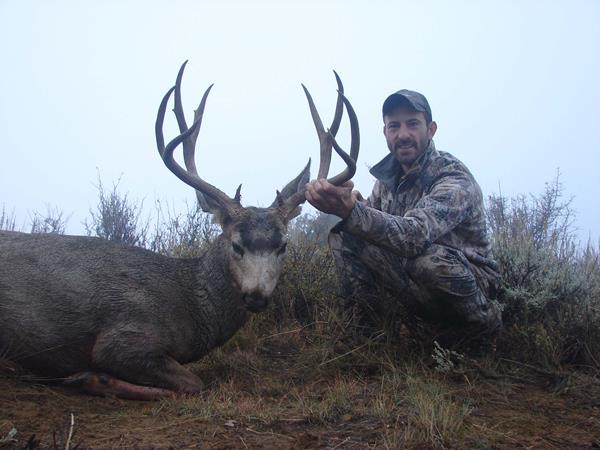
The terrain the Books sit above — broken canyon systems, isolated mesa tops, Roan Cliffs dropping into sagebrush drainages, sparse water sources that concentrate deer movement in predictable patterns — creates the conditions for exceptional mule deer. Low hunting pressure, because most people can't or won't deal with the country. Complex terrain that older bucks learn to use in ways that younger animals and most hunters never understand. And a genetics base that, left largely undisturbed by trophy-level harvest pressure, has produced bucks that put Utah firmly on the short list of places in the West where a 200-inch deer is a realistic possibility.
The History of the Land
For most of the 20th century, the Book Cliffs was genuinely roadless country. The deer herd existed in something close to its natural state, hunted modestly by locals and accessed only by those willing to pack in on foot or horseback. Management was informal, tags were not strictly limited, and the region remained obscure outside of eastern Utah communities.
The oil and gas development boom that accelerated through the 1980s and 1990s changed that in ways that cut in both directions. Energy companies pushed roads into previously inaccessible drainages to reach drilling pads. Those roads opened country that no hunter had walked in a generation. In the short term, harvest pressure spiked as hunters used energy-sector infrastructure to access areas that had been functionally wilderness. In some drainages, the roads also fragmented winter and summer range, contributing to increased vehicle strikes on deer and disrupting the migration corridors that define how Book Cliffs deer use the landscape across seasons.
USGS research documented the problem directly: mule deer in the Book Cliffs region actively avoid areas of dense oil and gas development. Computer modeling estimated that vehicle strikes alone could account for 50 or more doe losses annually — a casualty rate that, combined with harvest and predator pressure, can meaningfully suppress population recovery regardless of other management actions.
UDWR responded by tightening harvest control. The Book Cliffs units moved to limited entry management, with permit numbers set based on population objectives and buck-to-doe ratios rather than demand. The goal: protect enough mature bucks to maintain the genetics and the trophy quality that make these units worth hunting in the first place.
The Draw Reality
The Book Cliffs are divided into North and South limited-entry units, with HAMS (Handgun, Archery, Muzzleloader, Shotgun) designations adding additional permit structures. The point reality for the premiere rifle hunts is significant: competitive Book Cliffs rifle permits routinely require accumulating 15 or more bonus points under Utah's hybrid bonus point system, and the most sought-after seasons on the south unit can approach 20+ points for guaranteed draw odds.
Utah's system allocates 50% of permits to the highest-point applicants and 50% through a weighted random draw where each point earns additional entries. That means with 10+ points you have a real shot at the random draw pool, but the dedicated limited-entry rifle hunts remain a long-horizon investment for most hunters.
The population picture adds context to why these tags are hard to draw: the Book Cliffs deer herd has historically run below management objectives, with recent population estimates placing deer numbers roughly 50% below UDWR's target of 10,000 animals. Permit numbers reflect that reality. Fewer deer means fewer tags, which means more applicants chasing fewer opportunities — and point values that climb year over year.
That is not an argument against applying. It is an argument for starting to apply now if you haven't already.
Drawn a Book Cliffs tag, or hunting in the region on a general-season permit? Post your intel on the unit page — access notes, water sources, migration timing all help. Book Cliffs North → · Book Cliffs South →
What Makes the Bucks Exceptional
Limited-entry management is part of the answer. Low density is another part. But the Book Cliffs produce the kind of bucks they do primarily because of the terrain.
The Roan Cliffs and deep drainages force deer to navigate vertically in ways that flat or rolling country never demands. Summer range sits near the top of the formation — isolated mesa tops and benches above 8,000 feet where bucks spend four to five months in relative peace. Winter range drops into the lower canyon systems and sagebrush flats, with migration routes that can span 30 to 50 vertical miles between seasonal ranges. Mature bucks on that kind of terrain develop body mass, antler expression, and behavioral wariness that takes years of the same annual cycle to build.
The outfitter community on the Books reports consistent success finding 150- to 170-inch deer, with occasional bucks reaching into the 180s and beyond. Success rates for limited-entry rifle hunters, in seasons with healthy deer numbers, have historically run 76–92%. That success rate reflects both the concentrated permit numbers and the fact that hunters who have waited a decade to draw a tag tend to prepare accordingly.
The Terrain Challenge
Being honest about what it takes to hunt the Book Cliffs is not optional — it is part of any accurate assessment of this tag.
The Roan Cliffs above Rangely and the canyon systems draining north toward the Green River are not beginner country. The rock is loose. Water sources are scarce and require planning. Cell service is nonexistent in most drainages. Road access on energy-sector two-tracks can deteriorate quickly after rain or early snow, and hunters who drive into a drainage without a plan for getting out have created problems that search-and-rescue teams have documented repeatedly.
Most serious Book Cliffs hunters either hire a local outfitter with decades of country knowledge, or spend multiple pre-season trips on foot and on maps before their tag is in hand. Many successful hunters begin scouting the season before they draw, using archery deer tags or general-season turkey permits as an excuse to learn the country without the pressure of a limited-entry deer tag.
The south unit gets more hunter attention because of road access, and it is considered by most outfitters to be the preferred rifle unit. The north unit has more deer but requires hunters to cover more country to find the caliber of buck worth taking. Both reward patience over efficiency.
Conservation: What Mule Deer Hunters Fund
Utah's limited-entry mule deer system is one of the most direct examples in the West of conservation financing through hunting. Every limited-entry deer tag purchase funds the UDWR operations that manage the herd — population surveys, GPS collaring for migration corridor research, habitat improvement projects in key winter range, and predator management programs in areas where mountain lion predation on deer is documented.
Pittman-Robertson excise tax revenue — generated whenever any hunter anywhere buys firearms, ammunition, or archery equipment — provides federal matching funds that extend what Utah's tag revenue can accomplish. UDWR has used those funds to study the oil-and-gas avoidance patterns documented by USGS, to map migration corridors that cross private and BLM land, and to negotiate habitat easements in critical winter range drainages.
The Book Cliffs mule deer herd that exists today — even below management objectives — is the product of that system working imperfectly but persistently. The bucks that will be harvested ten years from now are alive today because permit numbers are controlled and funding is real.
The Wait Is the Price of Admission
There is no shortcut to a Book Cliffs limited-entry rifle tag. You apply, you accumulate points, you wait. Some hunters have done this for 15 or 20 years. Some draw at 10. The randomized 50% of the draw pool means that nothing is truly guaranteed regardless of point totals — which is either maddening or, depending on your perspective, a reminder that the draw itself is part of the hunt's character.
What is not uncertain is what the country looks like when you finally get there. The Roan Cliffs at first light with a mule deer buck working a rimrock bench above you is one of the definitive experiences available in western hunting. The wait is long because the tag is genuinely worth waiting for.
Apply for the Book Cliffs. Start now. And in the meantime, learn everything you can from hunters who have been there.
Hunted the Book Cliffs on any tag — general season, HAMS, archery, or limited entry? Your unit page report is the best resource available for the hunters still waiting on points. Post on Book Cliffs North → · Book Cliffs South → · Browse all Utah units →